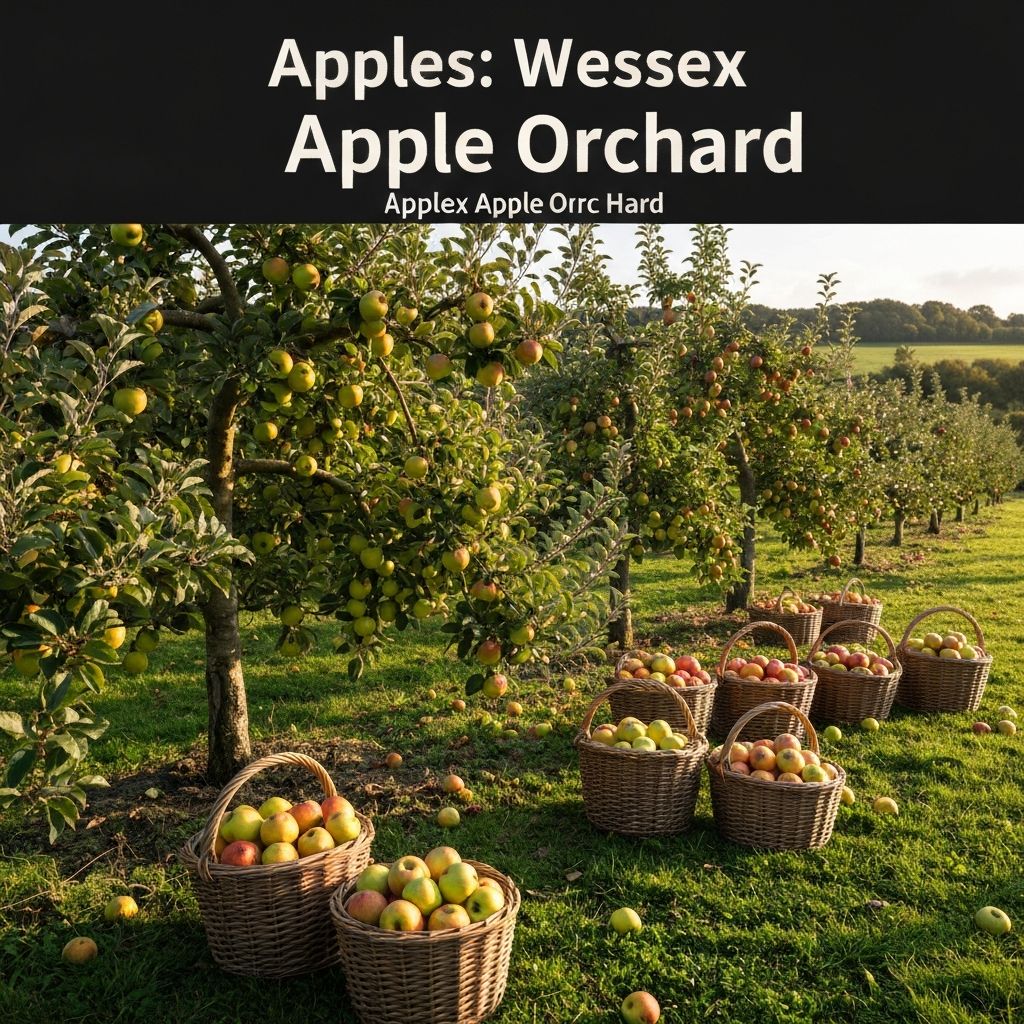
Nutritional Profile of Wessex Apples and Orchards
Exploring the heritage of Dorset apples and their significance in regional agriculture and food traditions
Apples in Wessex Agricultural Heritage
Apples represent one of the most significant crops in Wessex agricultural history. The region's climate and soil conditions proved ideal for apple cultivation, leading to centuries of orchard development and apple-growing traditions.
Dorset in particular developed a reputation for apple varieties suited to the region's conditions. Ancient orchards existed for hundreds of years, passing knowledge and specific apple tree varieties from generation to generation through local cultivation practices.
Apples served not only as fresh fruit but as the foundation for cider production, one of the region's historically important agricultural and cultural products. The transformation of apples into cider represented a crucial preservation strategy and cultural practice.
Apple Varieties and Regional Characteristics
Different apple varieties emerged in Wessex based on local growing conditions and selection. These weren't arbitrary choices but results of generations of cultivation in specific regional contexts.
Traditional Wessex apple varieties possessed characteristics suited to the region's climate and the uses valued in local food traditions. Some apples were better for storage, others for fresh eating, others specifically selected for cider production.
This diversity of varieties reflected both the agricultural knowledge communities developed and the multiple roles apples played in their food systems—fresh consumption, storage, preservation through drying, and conversion into cider.
Nutritional Composition of Apples
Apples contain various components that have been documented in nutritional research. These include carbohydrates, dietary fiber, vitamin C, and various phytonutrients. Different apple varieties contain somewhat different profiles based on their specific genetics and growing conditions.
Historically, apples provided important nutritional contributions to Wessex diets, particularly in providing vitamins and fiber. Fresh apples during harvest and stored apples throughout the year were reliable sources of these nutrients.
The flesh and skin of apples contain most of these nutritional components, with minimal processing required to access their nutritional profile. This made them valuable in traditional food systems.
Apples and Cider Production
Cider represents a crucial application of apples in Wessex culture. The fermentation of apple juice into cider created a preserved beverage that provided both flavor and, in smaller amounts per serving, various compounds from apples.
Cider production was historically significant for multiple reasons: it preserved the harvest, created an alternative to other beverages, reflected community and family traditions, and represented an important economic activity in the region.
The craft of cider production involved selecting appropriate apple varieties, managing fermentation, and developing the specific flavor profiles valued in regional traditions. This knowledge was passed through families and communities across generations.
Preservation and Year-Round Availability
Apples' capacity for storage made them exceptionally valuable in traditional food systems. Hardy varieties with appropriate growing conditions could be stored for months in cool conditions, providing fresh or near-fresh fruit long after the harvest season.
Traditional storage methods included cool cellars, root cellars, and other structures designed to maintain appropriate temperature and humidity. Carefully managed, stored apples could last into late winter or early spring.
This preservation capacity meant that apples could contribute to nutrition across seasons, not just during the limited harvest window. Alongside dried apples and apple-based preserves, the fruit supported year-round food availability.
Contemporary Apple Growing in Wessex
Modern apple cultivation in Wessex continues traditions while adapting to contemporary conditions and markets. Many traditional orchard sites continue production, while new orchards incorporate both heritage varieties and modern cultivars.
Contemporary interest in local food and regional agricultural heritage has contributed to renewed attention to traditional Wessex apple varieties and orchard preservation. This reflects both cultural interest in heritage foods and practical recognition of apples' continued significance.
Farmers markets, farm shops, and direct-to-consumer sales networks in contemporary Wessex often feature regional apples, creating modern expressions of the historical importance of regional apple production.
Cultural and Economic Significance
Apples represented more than simple nutrition in Wessex. They held cultural significance in traditions, celebrations, and economic importance in the regional agricultural system.
Apple harvests brought communities together. The work of harvest and processing created social bonds and economic activity. Regional reputation for apple quality contributed to the region's identity.
Understanding apples in Wessex context requires recognizing their multifaceted role—nutritional, cultural, economic, and social dimensions intertwined within regional traditions.
Educational Information: This article provides historical and informational context about apples in Wessex agricultural traditions. It is not nutritional advice or recommendations. Different individuals have different dietary needs and responses to foods. This content explores historical practices and agricultural heritage for informational and educational purposes.
Explore More Articles
For more detailed explorations of Wessex food heritage and regional traditions: